
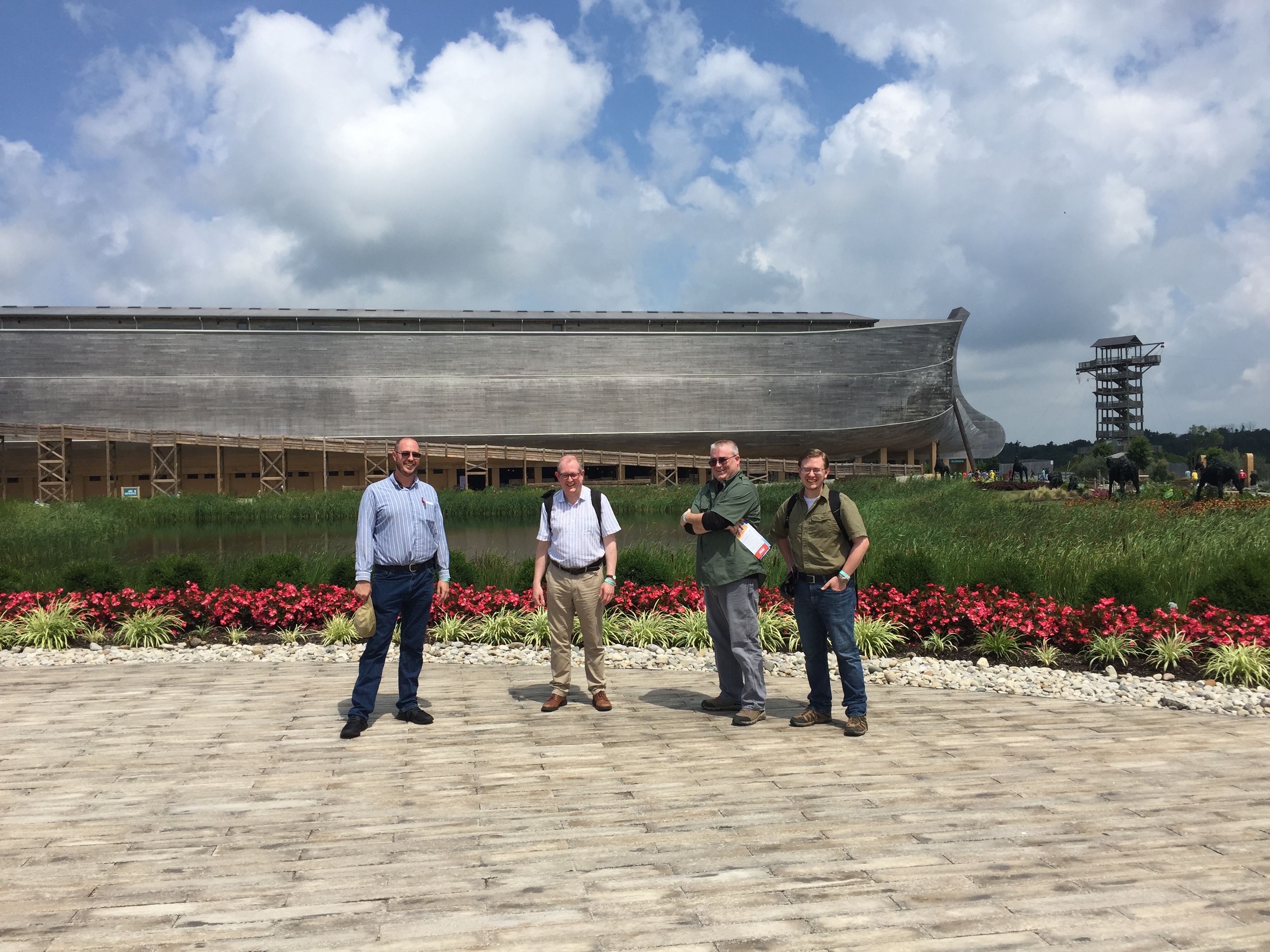
Yes, Origins 2019 was good. What else would I say? I will highlight each day, beginning with the first. One highlight of the conferences is the new relationships and old connections that are reestablished. Take for example the first day at the conference. For this conference I met Zachary Klein and spent time with Zak, Paul Garner, and Jeremy Blaschke. Paul had been in the states, recently speaking at a conference hosted by Zak. Zak sacrificially drove us around the first day to the field trip, the Ark Encounter, and allowed us to use his pass for the Ark Encounter. Zak is also helping me catch up on my blog, so I am again grateful!
The field trip was brief but an interesting first stop. It was a Corryville Formation of Northern Kentucky. There were probably 20 people, including a curious passerby who stopped to inquire about the gathered crowd! (That many people by the roadside attracts curiosity.)
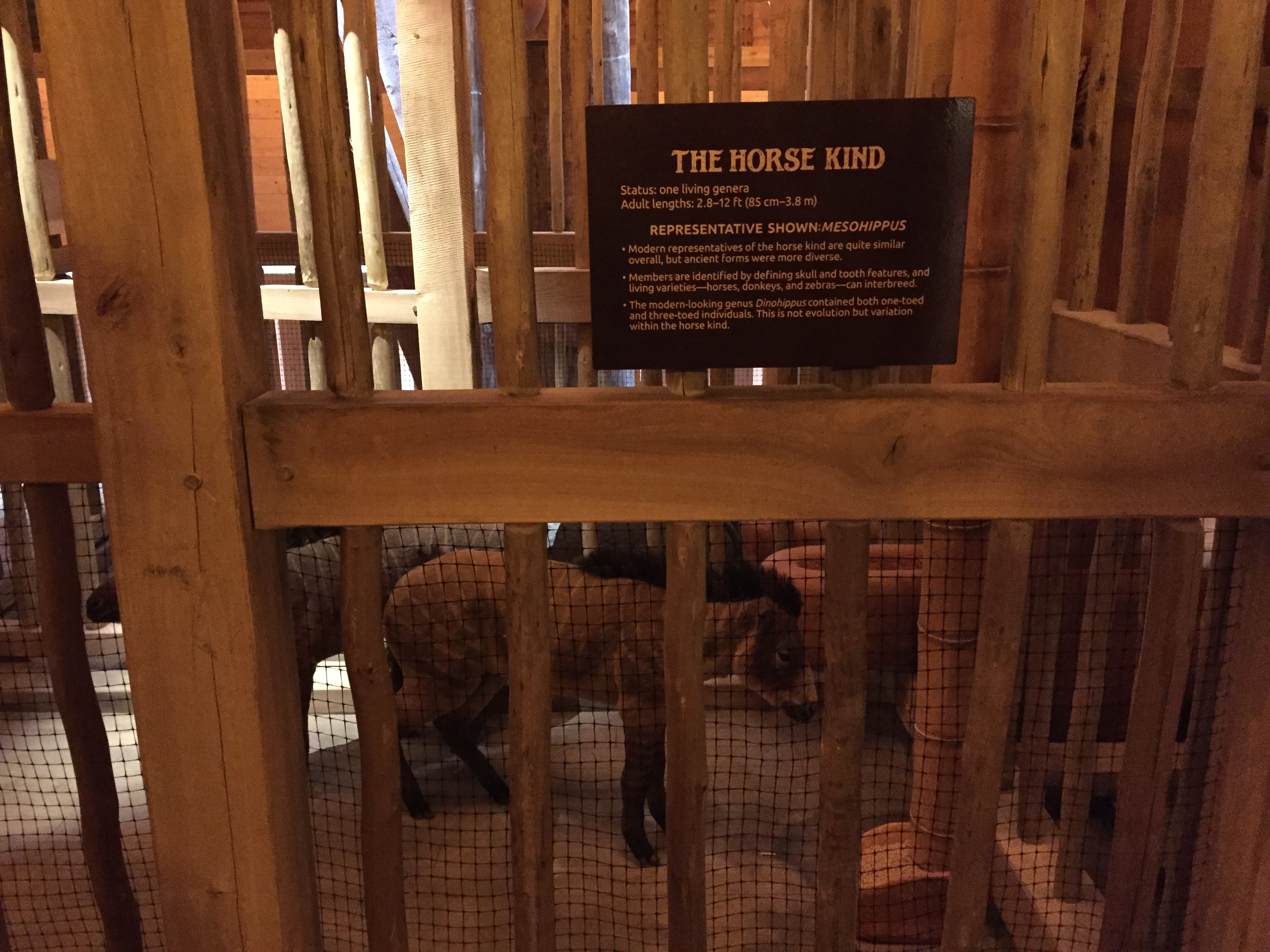
It was then on to the ark. For my first visit to the ark I was impressed at that animal selections paralleled work done by Creation Biology Society researchers over the last 20 years. The horse, for example, was not depicted by modern horses (genus Equus, as in typical ark depictions). Rather, it was a Mesohippus-like form (small and with toes). This was consistent with the 2003 Cavanaugh paper on a monobaraminic, stratomorphic series of the Equus lineage.
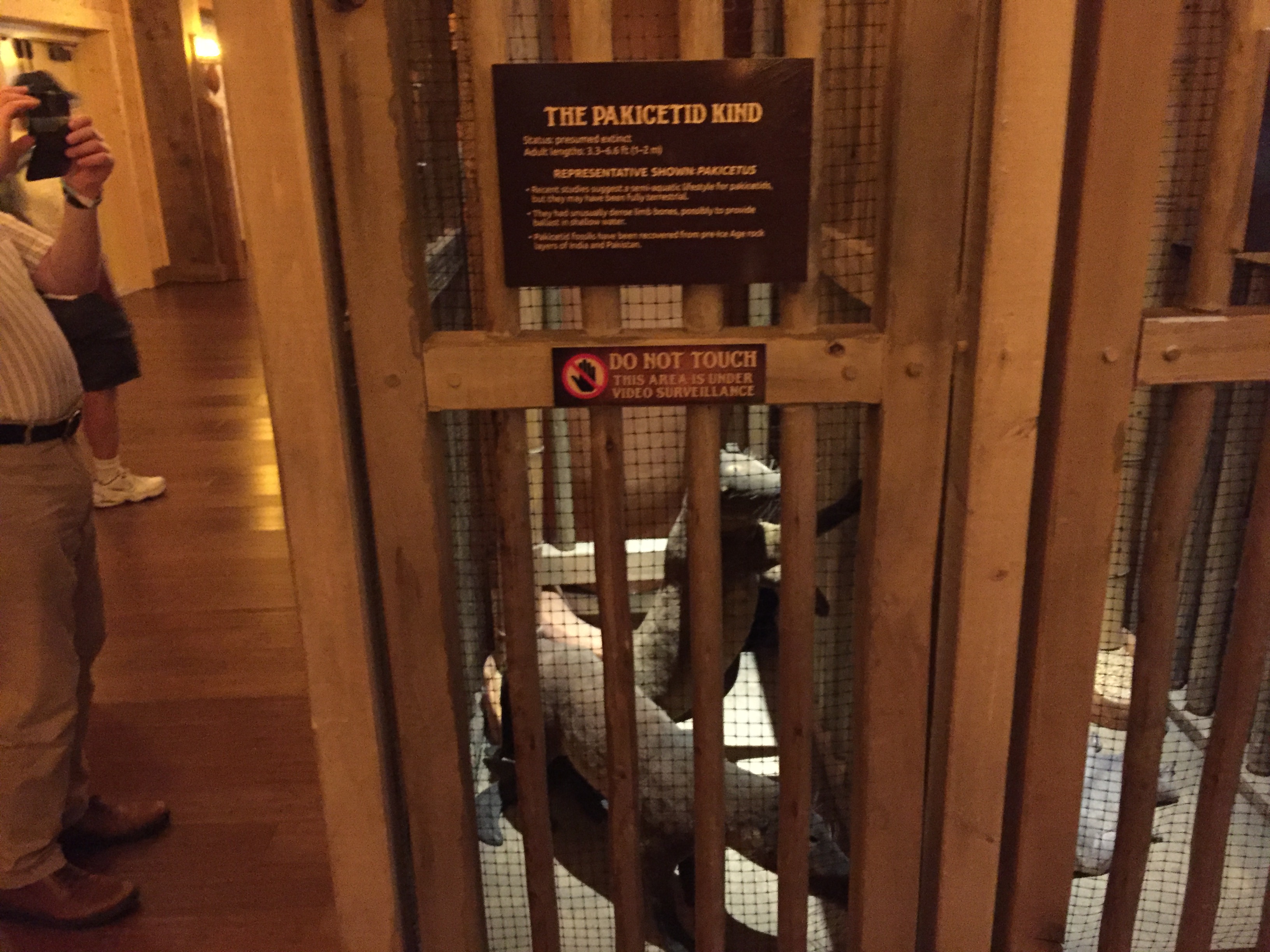
Likewise, the whale series has been a contentious issue in creationism. But without fully endorsing the transitional series, the ark designers should be credited with including a pakicetid. Pakicetidae are found in the Eocene and included terrestrial, dog-like mammals thought to be precursors to modern cetaceans. The position of Wise (1995) was not embraced, however, the display did not ignore the discussion. It was encouraging to see the ark designers beginning to build on a consistent, and integrated, biological and geological framework.
 Faith and Reason-25